


Mono-diets, such as the buckwheat diet, are effective means for rapid weight loss and at the same time cleansing the body.However, experts do not recommend frequently resorting to such methods.A buckwheat nutrition system, provided that the program is selected correctly, allows you to get good results without compromising your health.A diet designed for 7 days helps not only to remove harmful substances from the body, but also to improve the functioning of many systems.
The article will tell about the buckwheat diet in more detail, about all the important points, the pros and cons of this diet.
Description of power mode
In addition to buckwheat, the diet contains another main ingredient - kefir.Both products are affordable and can be purchased at any grocery store without spending a lot of money.Buckwheat is incredibly healthy and should be present in the daily diet of every person, even if he does not follow a dietary regime.It is worth remembering that when buckwheat is cooked, it loses most of its beneficial properties, so to obtain a beneficial effect, buckwheat should be prepared by any other method other than this.
Useful components of buckwheat:
- Fiber;
- Organic acids;
- Vitamins;
- Protein;
- Minerals.
This product cannot be called the lowest in calories, but experts often recommend it as a dietary dish.Buckwheat is absorbed by the body for a long time, therefore, the feeling of hunger will not arise soon after eating, and the body will need a lot of energy to process the food received.
The results of the buckwheat diet in 7 days:
- Losing excess weight.
- Normalization of the functioning of the body.
- Purgation.
- Promoting further light digestion of food.
- The number of rashes and inflammations decreases on the skin.
- The complexion is normalized, a healthy radiance returns.
The second important component of the buckwheat diet is kefir.Kefir also contains important minerals and acids that are necessary for the body.Kefir helps not only regulate digestive processes, but also facilitates the intestines in a stressful period for the body during a certain strict diet.Despite all the beneficial qualities of a fermented milk product, it is not recommended to consume more than 1 liter per day.
Important conditions subject to buckwheat diet:
- Buckwheat is the main component of the power for 7 days;
- It is forbidden to consume spices, salt, milk and butter;
- To increase the efficiency of buckwheat should be steamed or soaked;
- As a liquid during the day, it is recommended to use clean water, green tea, decoctions of herbs, in total there should be at least 1.5 liters per day.
There are no restrictions on the volume of cereal eaten per day.
There should be at least 4 meals a day, and you should also not eat 3 hours before bedtime.
After a few days, adaptation to the new diet will occur and the amount of cereal necessary per day will decrease, since the body will be saturated with a smaller amount of food.
How to cook buckwheat and how long the diet lasts

In total, the buckwheat diet lasts 7 days.Such a monotonous system, as a rule, is not able to provide the body with all the important elements for healthy functioning; therefore, it is not recommended to follow this nutritional system for longer than the specified period.Such a strict regimen should not be repeated earlier than after 3 months.It is important to take into account that the body’s reaction to a monotonous diet can be different, so there are no specific rules suitable for every person.During a diet, it is important to control your well-being and focus on the needs of the body.Then a strict mono-diet will not cause harm and will not disrupt metabolic processes.
It is also important to cook buckwheat correctly to achieve the desired result.To begin with, buckwheat must be thoroughly rinsed under running water.Next, the cereal is doused with boiling water to remove all small harmful particles and microbes.It is recommended to infuse buckwheat in advance.To do this, before going to bed, the required amount of buckwheat should be poured with boiling water, which should be 2 times more than the amount of cereal.The container or pan is closed with a lid and covered with a towel.In the morning, buckwheat porridge is ready to eat.
Advantages
The buckwheat diet is primarily aimed at dropping excess weight in the shortest possible time.When choosing a brief urgent monodite, it is necessary to pay attention to all the advantages of the buckwheat system.
Pros of the buckwheat diet:
- Long feeling of fullness after eating.
- Fiber helps cleanse the body of toxins, waste and other harmful substances.
- The ban on the use of salt and seasonings helps to normalize the operation of taste receptors in the future.
- Excess fluid is removed from the body.
- Depending on the individual characteristics in 7 days, you can lose up to 12 kilograms.
- The low cost of power, in a week you can not only lose weight, but also save money.
Disadvantages and contraindications
Since buckwheat diet refers to a monotonous diet, there are a number of disadvantages subject to this system.
Disadvantages of the buckwheat diet:
- Strong physical activity is prohibited, since a small amount of energy comes from food, so only walking is allowed.
- An oppressed state can be observed, as well as disruptions, since the menu is monotonous and uninteresting.
- In case of non -compliance with the correct lifestyle after the end of the diet, subsequently the discarded weight will return quickly and in a larger volume.
- The diet is incomplete, so it is recommended to take vitamin complexes.
- The body may have a negative reaction to the lack of sugar and proteins in sufficient quantities.
When significantly restricting your diet, it is important to pay attention to your individual characteristics.
The presence of some diseases limits the possibility of using this particular diet.
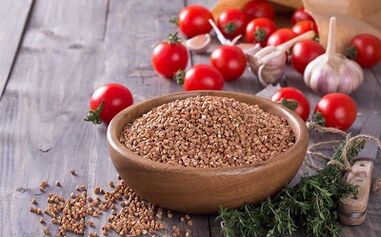
Buckwheat diet is prohibited:
- For diseases of the cardiovascular system;
- In case of illness associated with the liver;
- If there are problems with the gastrointestinal tract;
- For diabetes of any stage;
- During pregnancy at any time;
- During breastfeeding.
If there are none of the contraindications, but after starting the diet you notice a deterioration in your health, then of course the chosen nutritional system must be stopped.
Before the start of such a diet, you should consult a specialist to exclude all risks and get an extremely positive result.
Useful recommendations
To effectively lose weight, you need to familiarize yourself with the important rules of the buckwheat diet.Compliance with all recommendations will ensure the desired result.
Useful tips:
- Drink a lot of liquids, mostly clean water without gas.
- Additionally drink vitamin complexes.
- Restore strength and sleep for at least 8 hours.
- Before starting a diet, it is necessary to limit food intake, reduce the calorie content of foods per day, in order for the body to adapt to changed conditions.
- A few days before the start of the dietary regime, abandon sweet and bakery products.
- The last meal is allowed at least 3 hours before bedtime.
- A serving of buckwheat per day should not exceed 800 grams.
- Alcohol is prohibited during the diet.
If there is a strong irritability and a feeling of discomfort, including psychological, it is allowed to eat one apple per day, as well as sweeten the water with honey.If a feeling of weakness and dizziness appears, this may indicate an excessive loss of fluid from the body, which negatively affects well -being.If such a situation occurs, it is allowed to suck the porridge a little, to reduce the volume of the output fluid.It is also important to consider the menstrual cycle, during critical days, it is forbidden to carry out a buckwheat diet.
Subject to the diet, it is important to carefully monitor well -being.Incorrectly organized nutrition leads the body to a state of severe stress, which can lead to negative consequences.In the event of a strong sense of hunger and the deterioration of general well -being, a daily menu should be diversified within the permissible.Remember that each organism is individual and requires an appropriate approach to the organization of nutrition.